2x2 Cll Algorithms Pdf File
Scroll down before posting For people who love any sort of geometric puzzles, including but not limited to: Rubik's Cubes (and any size/design variants), the Square 1, the Pyraminx, et al. Think your cube is unsolvable? Want to know which cube is right for you? Want to brag about an accomplishment? Any other sort of posts like these?
Post them in the Daily Discussion thread! SUBREDDIT RULES: • Simple questions and PB posts belong in the Daily Discussion Thread. • Flaming and hateful comments will be removed. Ad hominem criticism, such as “You’re only sub30, what do you know about x?” will not be tolerated either.
Answering a question with 'just google it' is also not an acceptable response. • Titles need to be relevant to your post in a meaningful way. It must directly relate to the content of your post. If someone can’t figure out the topic of your thread from the title, it will be removed. • Self promotion (youtube videos, etc) is allowed once per week.
• No biased promotion of one cube shop over another. This includes 'X store is now selling this cube!' Posts, sales and deals, and self-promotion from stores. • Private cube sales and trades aren't allowed, go to for that. • Contest entries (e.g. Ones that are hosted by other websites, 'share this page to win', etc) are prohibited. • This is not the place to contact cube shops for customer support, please use private messages instead.
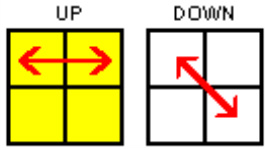

What is Twisty CLL? Twisty CLL is an advanced version of CLL where one corner can be oriented incorrectly in your layer. The corner twists are called TCLL + and TCLL.
• No affiliate links. Only link to websites etc directly. • Follow the sitewide rules, and abide by PM any of the mods if you need some mod-ly duties performed. Related: • • • New to Cubing? • • • • • • • • • Other Links: • A huge thank you to for the awesome header image.
I recently got my first sub-5 AO100 with Ortega and some SS, and I told myself once I did that, I'd learn CLL. I could press on, learn some more SS and practice OLL prediction to get sub-4, but I feel like it would be more beneficial to learn CLL. The only problem is I'm really not sure how to approach learning it. I'm in no rush to learn and am planning on memorizing one, maybe two algs per day, but I'm not sure what to do while I learn them. At this point, I have roughly 30 new algs to learn and can realistically accomplish that in about three weeks, but what do I do in those three weeks? Should I approach it like learning full OLL for 3x3 and keep doing timed solves while I practice CLL on the side?
Or should I put the timer away for three weeks, learn full CLL, then start timing again? Also, is it best to learn CLL one set at a time? By that I mean is it most efficient to learn the Sune algs, then Antisune, then T, and so on? Like I said, I'm not in any rush to learn.
I just want to make sure I'm approaching this effectively. I'd love to hear from anyone who knows CLL.
In particular, I'm interested to know how you learned it, how long it took, and what, if anything, you would do differently if you could relearn it. Thanks in advance. The way I'm learning CMLL (not CLL, but close enough) is to first pick my slowest set to two-look, and then find a good alg for each case, and an angle I can recognise them all from, trying to minimise the number of algs that need an AUF between recognition and execution. Redsail Cutting Plotter Usb Driver For Windows 7. I then practise the set till I know the algs, and then practise them while timing my recog + execution until it's in line with the other cases I can one-look.
Also, I wouldn't recommend learning sune and antisune first, because they have the worst algs, and are quickest to two-look. Definitely learn them one set at a time. I would start with the H set as there are only 4 cases and they have the easiest recognition. Once you understand the principles if recognition then the rest of U, T, L and Pi are very easy. Sunes and Antisunes are slightly more difficult.
They are usually left to learn last. Chris Olson has good recognition and execution videos and I would just follow them.
I recommend this order: H, Pi then U/T/L in any order and then Sunes and Antisunes. I personally think my method of sune and antisune recognition is the best and easiest to learn and progress with. Although it isn't well known by any means, I think it's far better than any other system. Here: • • • •. Sup, I do COLL, which is basically CLL but slightly longer algorithms, the way I did it was one set at a time, trying to learn the entire set in one or two sessions. Then practice them a bit. Then during solves solves, if you dont get one you know, do a random OLL until you get one that you know.
This will help you react to the case, and not just stare at it when it does come up. One you learn one set, when you time yourself, you just carry on as usual unless its a set you know, so for me, I perform COLL unless it is sune/antisune or 1 particular Pi case. Bharathamatha Images. Its different for 2x2 probably, but I definitely think that you should learn them in sets.
Contents • • • • • • • • • Algorithms Note that all of these algorithms are written in the Western, where a lowercase letter means a double-layer turn and rotations are denoted by x, y, and z. () Click on an algorithm (not the camera icon) to watch an animation of it. U cases Name: U Occurence: Optimal moves:? HTM Description: Recognition: bar on top and bar on the side Algorithm: CLL CLL CLL CLL CLL T cases Name: T Occurence: Optimal moves:?
HTM Description: Recognition: Algorithm: CLL CLL CLL CLL CLL L cases Name: L Occurence: Optimal moves:? HTM Description: Recognition: Algorithm: CLL CLL CLL CLL CLL S cases Name: S Occurence: Optimal moves:? HTM Description: Recognition: Algorithm: CLL CLL CLL CLL CLL -S cases Name: -S Occurence: Optimal moves:? HTM Description: Recognition: Algorithm: CLL CLL CLL CLL CLL H cases Name: H U Occurence: Optimal moves:? HTM Description: Recognition: Algorithm: CLL CLL CLL CLL CLL CLL CLL CLL CLL CLL CLL CLL CLL CLL CLL CLL CLL CLL CLL CLL CLL CLL CLL CLL CLL CLL CLL CLL CLL Name: H D Occurence: Optimal moves:?
HTM Description: Recognition: Algorithm: CLL Name: H R Occurence: Optimal moves:? HTM Description: Recognition: Algorithm: CLL Name: H F Occurence: Optimal moves:? HTM Description: Recognition: Algorithm: CLL pi cases Name: pi Occurence: Optimal moves:?
HTM Description: Recognition: Algorithm: CLL CLL CLL CLL CLL CLL (2x2x2) See also: • • • • • This page is a (incomplete). There may be suggestions on its.