Program For Bisection Method In Fortran Programming
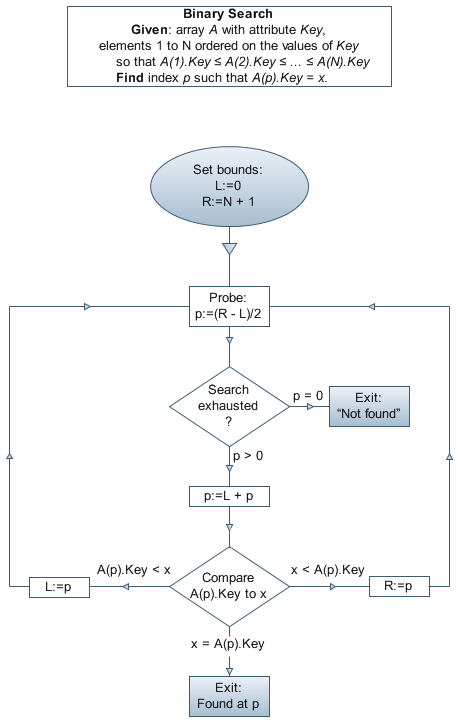
Program bisect real(8):: output call bisection(3.d0,4.d0,2.d0,output) print*, output end program bisect subroutine bisection(a,b,error,result) real(8):: a,b,error,c,result logical:: proceed proceed =.true. Do while (proceed) if (sin(a)*sin(b).lt.
0.d0) then c=(a+b)/2 if (sin(a)*sin(c).lt.0.d0) then b=c else a=c end if else stop 'cannot be bisected' end if if (abs(a-b).lt. Error) then proceed =.false. End if end do result= a end subroutine bisection A version of the same code is uploaded. This is the minimal example i could come up with. This yields a segmentation fault on running the executable with gfortran, and also on the website.
The Bisection Method The. We had to change the body of the Java program to find the root of a different function. This is very inconvenient. ROOTS OF A REAL FUNCTION IN FORTRAN. Program to demonstrate Bisection. Module to find the real root of a continuous function by the Zeroin method Program to.
The dummy arguments a and b are associated with actual arguments that are constants. Constants are not definable - your program is trying to change the value of '3.0d0' or '4.0d0'. If your program were to succeed then chaos would break out across the universe. I strongly recommend: • Use module procedures.
This allows the compiler to check that actual arguments are consistent with dummy arguments. • Use INTENT specifications on your dummy argument definitions. This allows the compiler to check that things that need to be modifiable are, and that things that may not be modified are not. A workaround for your problem is to have appropriate variables in your main program that hold the initial values of 3.0d0 and 4.0d0, and pass those modifiable variables to your subroutine. Alternatively you could create temporary copies of the dummy arguments inside the subroutine. In F2003 the VALUE attribute can be used to do this automatically.
While we're at it - use IMPLICIT NONE in all scopes. The subroutine does treat the problematic dummy arguments as variables. That's the issue. Fortran's model of argument 'passing' (in this case - being imprecise for the sake of brevity) is 'as if' the dummy argument and actual argument referred to the same underlying thing. La Muerte Y La Doncella Obra De Teatro Pdf. You are not just passing a value - a form of association is established between the dummy argument and the actual argument.
(How the compiler actually implements things is a separate issue - it may pass a reference to the actual argument or perhaps pass values back and forth - a legal program cannot tell. Aarohan Serial Wikipedia on this page. ) – Feb 13 '13 at 20:27.